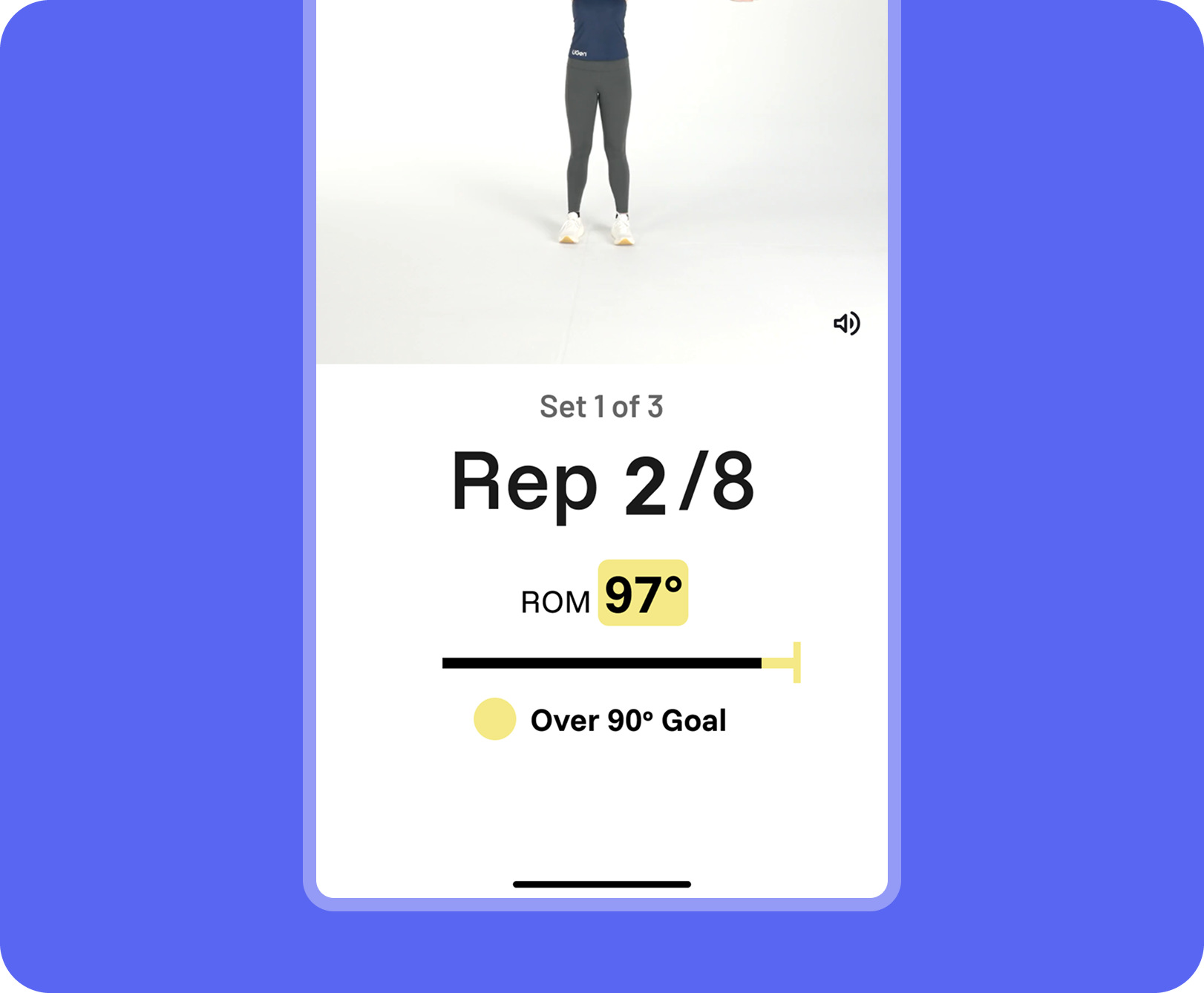
UGen exercise screen showing rep 2 of 8, a range of motion of 97 degrees and an over 90 degree goal

Discovering a New Way
To Coach

UGen Health Inc

2026Product Designer1 month

UGen Health is a rehabilitation technology start-up combining intelligent motion sensors with real-time software corrections to help patients and athletes recover faster with perfect exercise form. In this project I focused on how to make this relationship between robotics, information and movement as natural as possible.
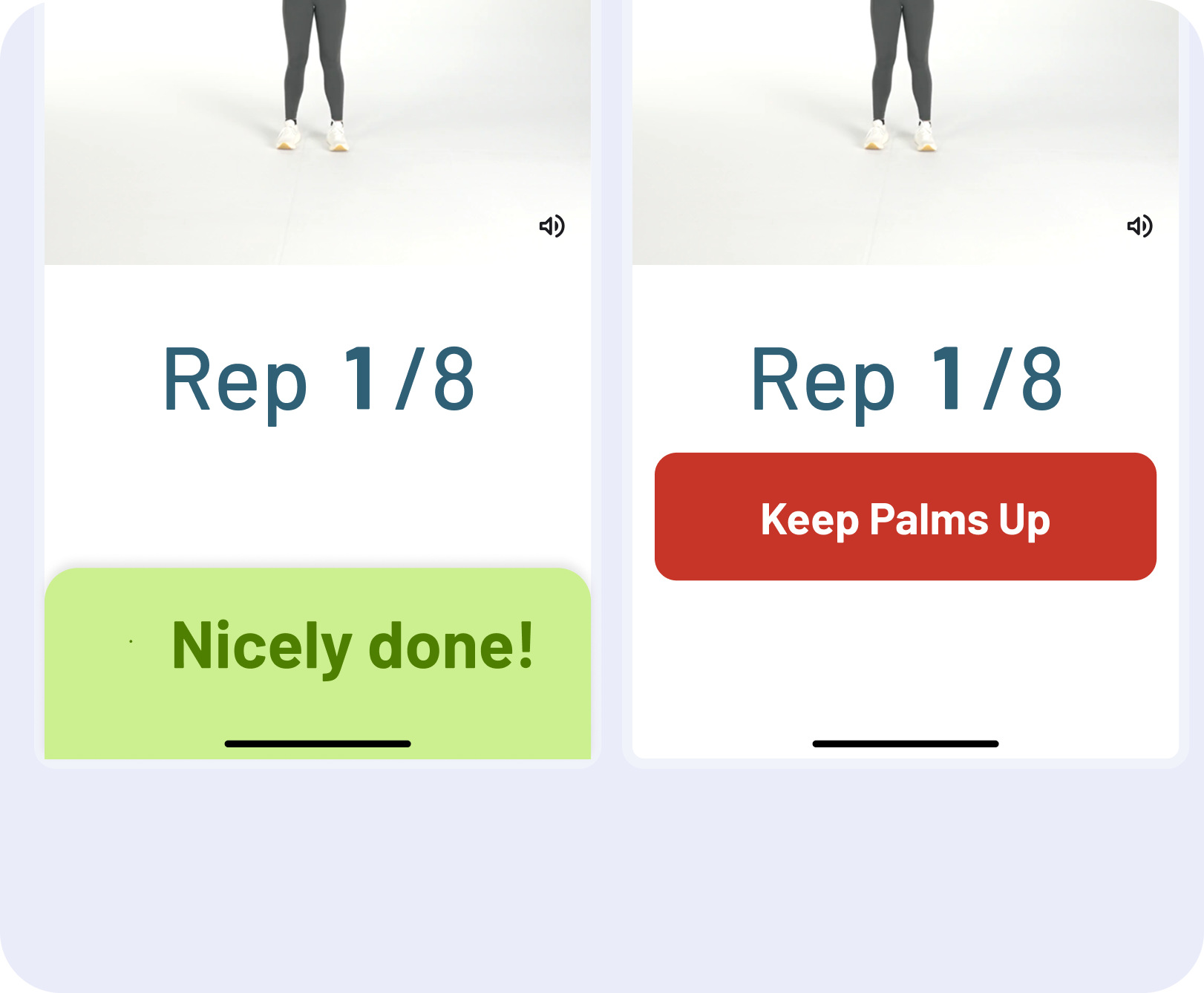
Two exercise screens: one reading “Nicely done!” and one reading “Keep Palms Up”

Defining the problem

UGen’s sensors were sending data to their application at a few key points in a patient’s rep, and yet we were only communicating to the patient an integer and a confirmation. I felt the existing solution left patients and athletes in the dark about multiple key data points that could vastly affect their recovery.

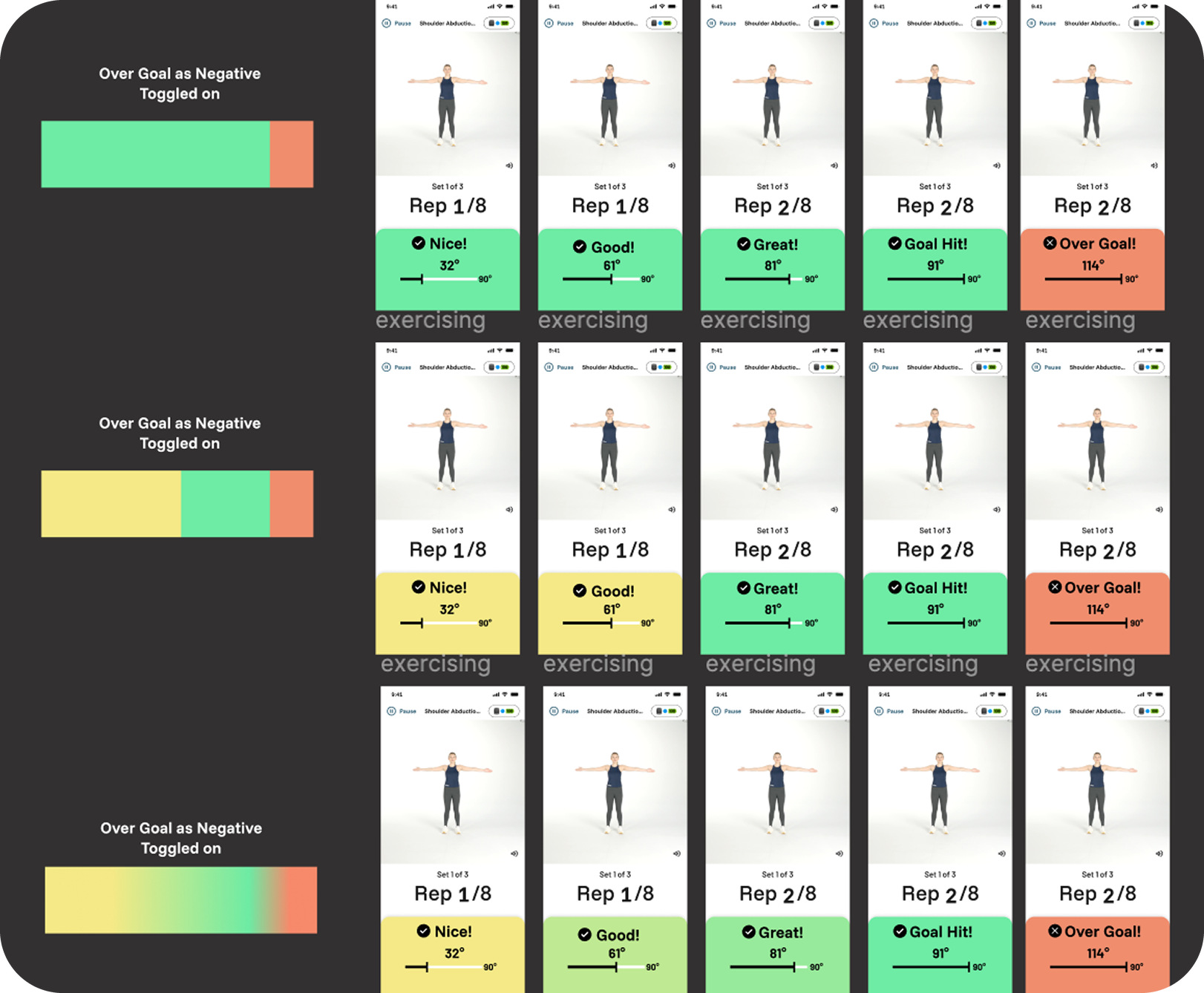
Grid of exercise screens exploring color gradients for rep quality

Considering FDA Constraints

One concept I explored used color to communicate the quality of each rep at a quick glance. However, since UGen’s software side is registered as a general wellness product, and in theory cannot make claims to the patient about their health, we explored how a gradient of color changes the liability claims over preset thresholds. It’s really interesting how such slight visual changes can have broad impacts on what a product is communicating.

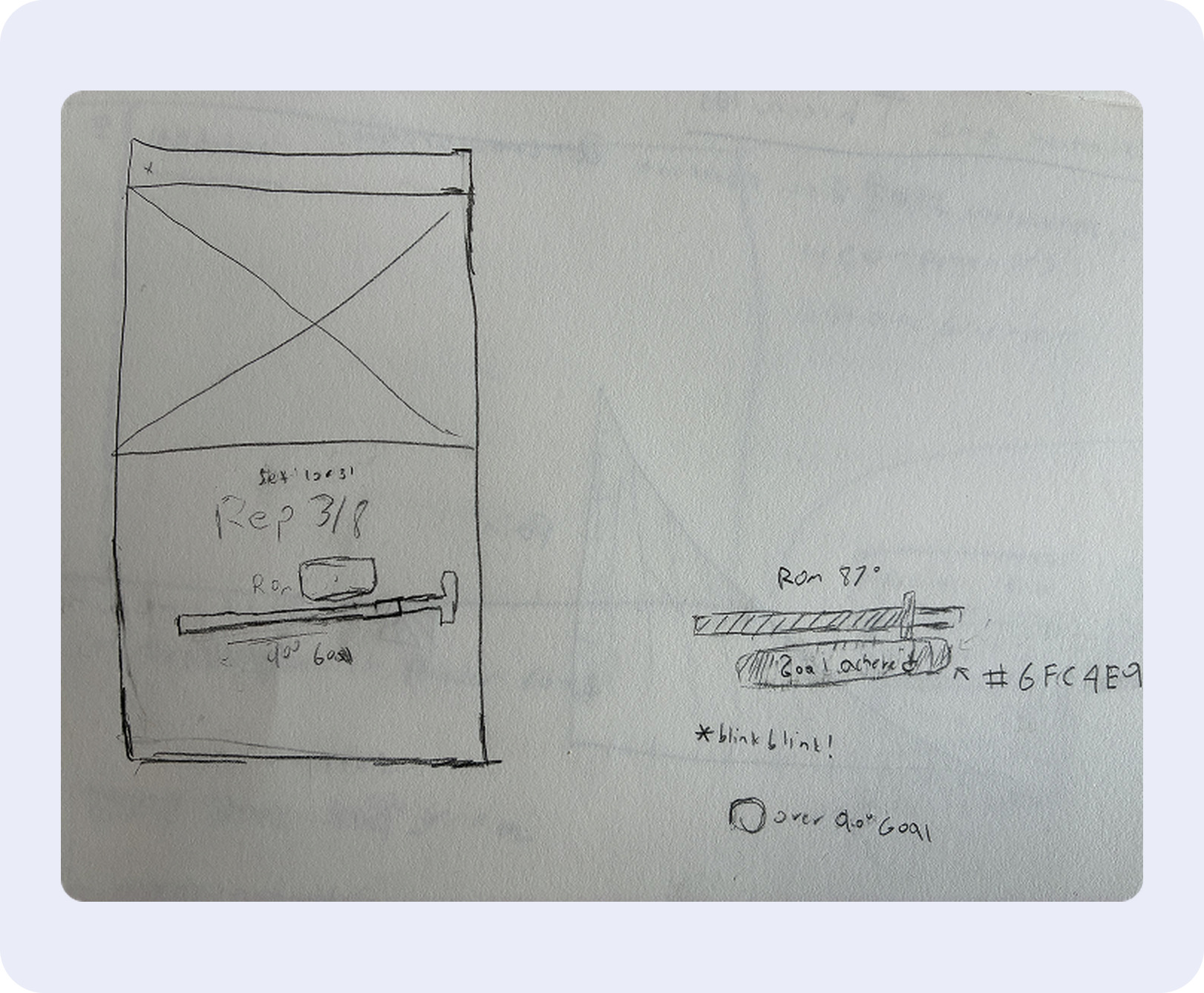
Hand-drawn wireframe sketch of the new rep screen

Pivoting After a Quick Test

After testing a prototype on a few coworkers, I realized several pieces were communicating the same thing, and I brought my team together to brainstorm a more elegant solution.

Final Solution

By the end of the sprint our key and most memorable experience evolved from coaching with a few interstitial moments to a fluid, data-rich journey. This exploration also unveiled new applications of our product, now enabling us to communicate the over-extension of a rep, covering a common rehab error costing the US healthcare system upwards of $2.7 billion annually.